What to plan for
- Sunlight
- Full sun
- Water
- Dry between soakings
- Spacing
- 18–24 in
- Soil pH
- 6.5–7.5
- Container
- 1 gallon
- Planting window
- After spring frost
PLANT DETAILS + GROWING CARE
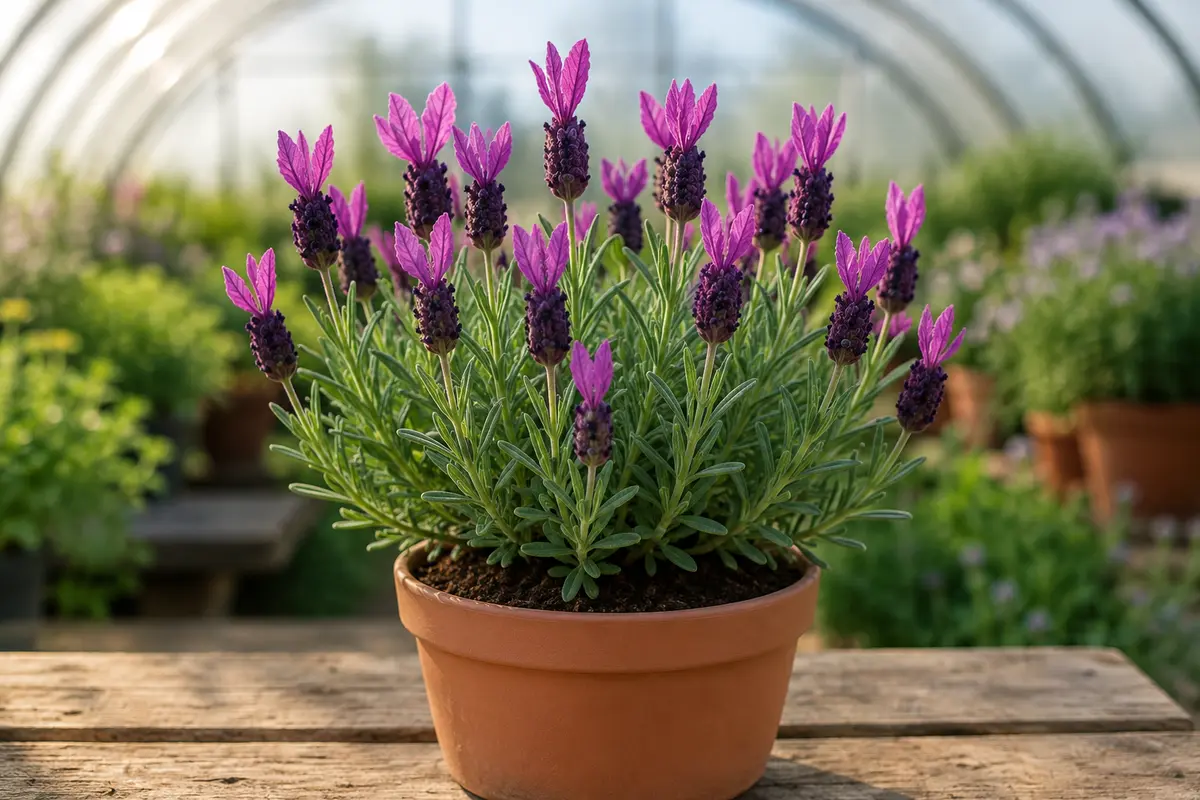
Butterfly blooms + heat
An extra-fast-draining mix for the distinctive rabbit-ear flower heads of Spanish or butterfly lavender.
GROWING GUIDANCE FOR
Central Maryland / BowieLocal Bowie-area baselineAt a Glance
Start with the plant, the space it needs, and the conditions that determine whether it will thrive.
CARRIED BY CENTRAL MARKET
This guide remains fully available even when the plant is not listed for pickup.
WHAT IT IS
A compact Mediterranean lavender with dark cone-like flower heads topped by showy rabbit-ear bracts.
BEST FIT
A strong seasonal patio and pollinator plant for a hot, sunny Bowie garden, especially when the distinctive spring flowers are the priority.
QUICK PROFILE
BEST TIME TO PLANT OUTDOORS
RIGHT NOW
The next recommended Bowie-area window is May–mid-June. Treat Spanish lavender as a seasonal container plant in Bowie unless a named cultivar has a verified colder hardiness rating.
Warm, settled weather protects this tender lavender from cold injury. Waiting until May also reduces the risk of a wet, chilled root zone.
Treat Spanish lavender as a seasonal container plant in Bowie unless a named cultivar has a verified colder hardiness rating.
SEASONAL REFERENCE
October Central Maryland
CURRENT STAGE
Typical stage for October in Central Maryland
Warm weather may support scattered flowers, but the evergreen foliage becomes the main feature as nights cool.
Fewer new flower heads in September and October is seasonally normal.
Living foliage remains gray-green; sudden browning is more consistent with cold injury than dormancy.
The exact pace for spanish lavender can shift with sun, planting age, pruning, and Bowie-area weather.
These signs may be worth investigating. A symptom or photo alone cannot identify the cause.
December–March
April–May
June–August
September–November · Now
This is a typical Central Maryland stage, not a guarantee for every garden or every year.
University of Maryland Extension · Care of Herbs and Starting Herbs from Seed Last reviewed: September 3, 2026This is what a healthy plant typically looks like at this stage. It is seasonal reference guidance—not a visual diagnosis. Microclimate, weather, plant age, recent transplanting, pruning, and cultivar variation can change appearance.
Species origin
Mediterranean coasts including France, Portugal, and Spain
Mapped countries: France, Portugal, Spain
Pins show documented countries within the species’ native range; follow the source for the full range.
The species is usually not reliably hardy in Bowie; named cultivars vary, so retain the tag and plan winter protection.
Container size, microclimate, cultivar, tunnel temperature, and actual weather can move the timing. Use the plant tag and direct observation with this guide.