What to plan for
- Sunlight
- Full sun
- Water
- Evenly moist
- Spacing
- Check your cultivar
- Soil pH
- 6.0–7.5
- Container
- 3+ GAL
- Planting window
- See planting guidance
HIGH TUNNEL + CONTAINER
Cool + moisture steady
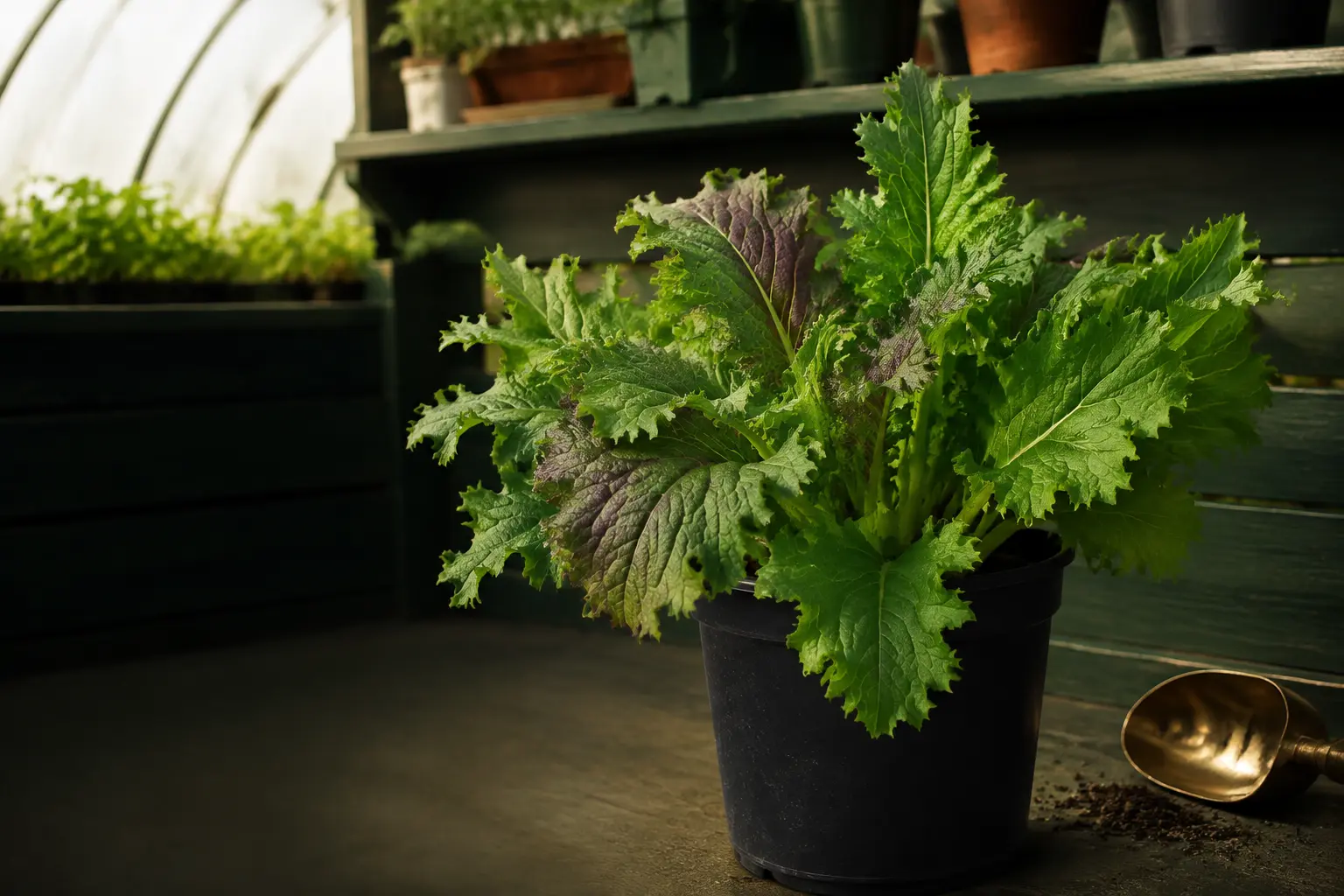
A productive leafy-green mix for bunching mustard and tender baby-leaf harvests.
GROWING GUIDANCE FOR
Central Maryland / BowieLocal Bowie-area baselineAt a Glance
Start with the plant, the space it needs, and the conditions that determine whether it will thrive.
CARRIED BY CENTRAL MARKET
This guide remains fully available even when the plant is not listed for pickup.
WHAT IT IS
A quick, peppery Brassica grown for baby leaves or full-size bunches in many green, red, frilled, and broadleaf forms.
BEST FIT
A strong cool-season succession crop when you want fast turnover and can protect young foliage from flea beetles.
QUICK PROFILE
BEST TIME TO PLANT OUTDOORS
RIGHT NOW
The next recommended Bowie-area window is April–mid-May. Approximate Central Maryland outdoor planting period. Check weather, soil conditions, and the cultivar before planting. Direct sow successions in cool weather; heat increases bolting and harsh flavor.
Approximate outdoor calendar for Central Maryland. Early, mid, and late-month source wording is represented by calendar dates; confirm the cultivar, local weather, soil, and production system.
Approximate Central Maryland outdoor planting period. Check weather, soil conditions, and the cultivar before planting. Direct sow successions in cool weather; heat increases bolting and harsh flavor.
TIME TO HARVEST
Count from: sowing seed
General leafy-green range for full-size leaves; young leaves can be cut earlier. Leave the growing center for repeat picking. Check the cultivar packet for a more specific interval.
Approximate guidance, not a guaranteed harvest date. Cultivar, plant size, light, temperature, and care affect timing. For perennials, first harvest does not mean full production. Follow the plant tag and check readiness before picking.
SEASONAL REFERENCE
October Central Maryland
CURRENT STAGE
Typical stage for October in Central Maryland
Cool-weather leaves expand quickly and may show richer color depending on the variety.
Cool nights can deepen mustard greens color or sweetness without signaling failure.
The crown and inner leaves should remain firm through normal light frost.
The exact pace for mustard greens can shift with sun, planting age, pruning, and Bowie-area weather.
These signs may be worth investigating. A symptom or photo alone cannot identify the cause.
December–March
April–May
June–August
September–November · Now
This is a typical Central Maryland stage, not a guarantee for every garden or every year.
University of Maryland Extension · Central Maryland Vegetable Planting Calendar Last reviewed: September 3, 2026This is what a healthy plant typically looks like at this stage. It is seasonal reference guidance—not a visual diagnosis. Microclimate, weather, plant age, recent transplanting, pruning, and cultivar variation can change appearance.
Species origin
Russia to central Asia
Mapped countries: Russian Federation
Pins show documented countries within the species’ native range; follow the source for the full range.
Heat speeds bolting and sharpens flavor. Decide whether the market wants mild baby leaf or mature spicy bunches.
Container size, microclimate, cultivar, tunnel temperature, and actual weather can move the timing. Use the plant tag and direct observation with this guide.