What to plan for
- Sunlight
- Sun to part shade
- Water
- Consistently moist
- Spacing
- Check your cultivar
- Soil pH
- 6.0–6.5
- Container
- 1 gallon
- Planting window
- Spring / early fall
PLANT DETAILS + GROWING CARE
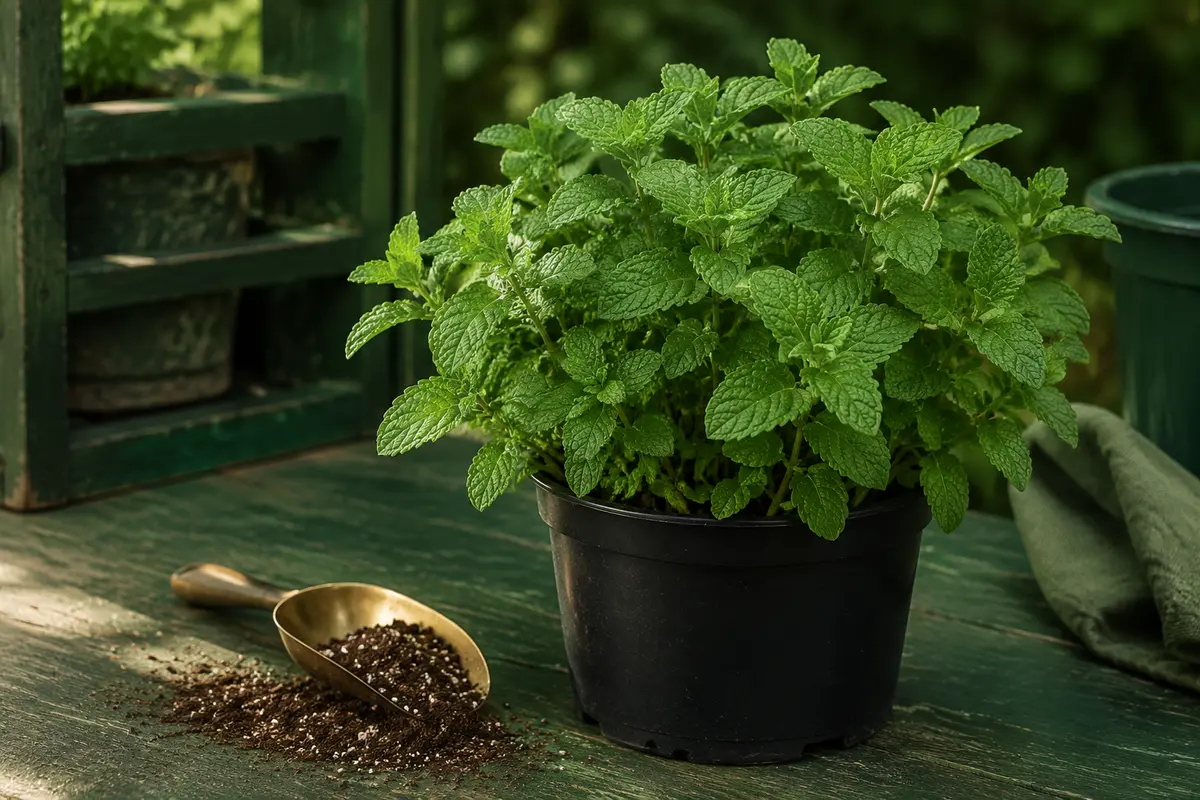
Rich + moisture holding
A moisture-forward container mix for vigorous mint without sacrificing drainage around the roots.
GROWING GUIDANCE FOR
Central Maryland / BowieLocal Bowie-area baselineAt a Glance
Start with the plant, the space it needs, and the conditions that determine whether it will thrive.
CARRIED BY CENTRAL MARKET
This guide remains fully available even when the plant is not listed for pickup.
WHAT IT IS
A fast-growing aromatic herb harvested for fresh leaves, teas, sauces, and seasoning; many Mentha species and hybrids are sold as mint.
BEST FIT
An easy choice for sun or part shade when you can give it a dedicated container and consistently moist soil.
QUICK PROFILE
BEST TIME TO PLANT OUTDOORS
RIGHT NOW
The next recommended Bowie-area window is April–May. Containers help contain spreading roots. Divide or transplant in cool weather for the fastest recovery.
Mint establishes rapidly in the cool, moist conditions of spring or early fall. Hot-weather planting needs more frequent watering.
Containers help contain spreading roots. Divide or transplant in cool weather for the fastest recovery.
TIME TO HARVEST
Count from: planting a rooted plant or division
Light picking is possible in the first growing season. Take tender tips and leave a leafy plant to regrow; a small or recently divided plant needs longer.
Approximate guidance, not a guaranteed harvest date. Cultivar, plant size, light, temperature, and care affect timing. For perennials, first harvest does not mean full production. Follow the plant tag and check readiness before picking.
SEASONAL REFERENCE
October Central Maryland
CURRENT STAGE
Typical stage for October in Central Maryland
Growth slows, flowers finish, and older leaves may yellow as mint begins shifting energy to its rhizomes.
Patchy top decline after cool nights is normal for this herbaceous perennial.
Some green growth usually persists until frost even while older stems fade.
The exact pace for mint can shift with sun, planting age, pruning, and Bowie-area weather.
These signs may be worth investigating. A symptom or photo alone cannot identify the cause.
December–March
April–May
June–August
September–November · Now
This is a typical Central Maryland stage, not a guarantee for every garden or every year.
University of Maryland Extension · Care of Herbs and Starting Herbs from Seed Last reviewed: September 3, 2026This is what a healthy plant typically looks like at this stage. It is seasonal reference guidance—not a visual diagnosis. Microclimate, weather, plant age, recent transplanting, pruning, and cultivar variation can change appearance.
Plant group origins
Mint species occur across much of the world; spearmint has a native range from Europe to China
Mapped countries: China, United Kingdom
The guide covers several Mentha species. Pins show spearmint ancestry as a culinary example, not a single origin for every mint.
Do not release mint into an open bed unless aggressive spreading is acceptable. Rhizomes can escape through drainage holes or over pot rims.
Container size, microclimate, cultivar, tunnel temperature, and actual weather can move the timing. Use the plant tag and direct observation with this guide.