What to plan for
- Sunlight
- Full sun
- Water
- Dry slightly between
- Spacing
- 18–24 in
- Soil pH
- 6.5–7.5
- Container
- 1 gallon
- Planting window
- Spring / early fall
PLANT DETAILS + GROWING CARE
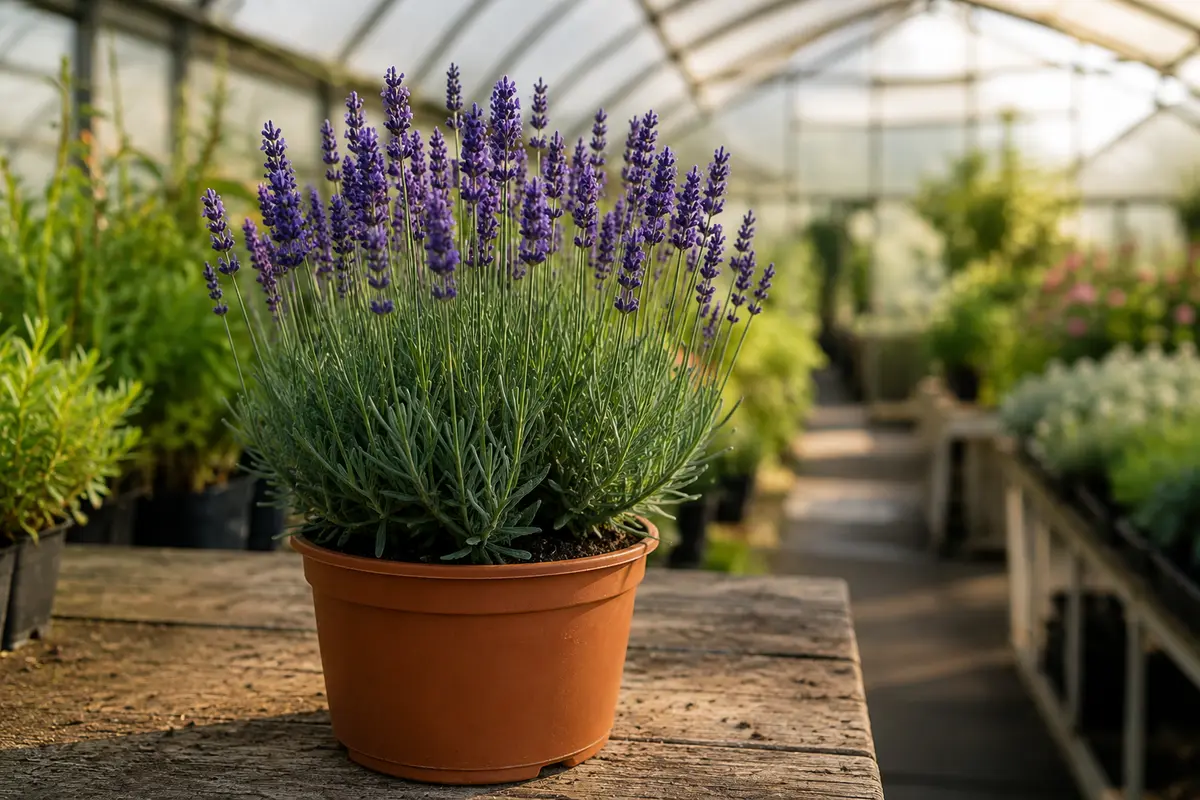
Hardy + fast draining
A lean, highly aerated mix for the most cold-hardy of the three lavenders and the best outdoor-perennial candidate for Bowie.
GROWING GUIDANCE FOR
Central Maryland / BowieLocal Bowie-area baselineAt a Glance
Start with the plant, the space it needs, and the conditions that determine whether it will thrive.
CARRIED BY CENTRAL MARKET
This guide remains fully available even when the plant is not listed for pickup.
WHAT IT IS
A compact, aromatic Mediterranean subshrub with narrow gray-green leaves and slender flower spikes; it is the classic culinary and oil lavender.
BEST FIT
The best of these three lavenders for outdoor perennial use in Bowie when you can provide full sun, lean soil, excellent drainage, and open airflow.
QUICK PROFILE
BEST TIME TO PLANT OUTDOORS
RIGHT NOW
The next recommended Bowie-area window is Mid-April–May. Use a raised, fast-draining site. Fall plants need several weeks of root growth before hard freezes.
Spring is safest in Bowie because English lavender can root before humid summer weather. Early fall also works when drainage is excellent and planting is not delayed.
Use a raised, fast-draining site. Fall plants need several weeks of root growth before hard freezes.
TIME TO HARVEST
Count from: planting a rooted nursery plant
Light flower picking may be possible in the planting year if the plant blooms. Allow small plants to build their roots and canopy before heavy cutting; seed-grown plants take longer.
Approximate guidance, not a guaranteed harvest date. Cultivar, plant size, light, temperature, and care affect timing. For perennials, first harvest does not mean full production. Follow the plant tag and check readiness before picking.
SEASONAL REFERENCE
October Central Maryland
CURRENT STAGE
Typical stage for October in Central Maryland
Most peak flowering is finished; dry stalks may remain while the gray-green mound continues modest vegetative growth.
Some dry flower stems above living foliage are normal in September.
Healthy basal foliage remains aromatic and predominantly gray-green, not persistently wet or blackened.
The exact pace for english lavender can shift with sun, planting age, pruning, and Bowie-area weather.
These signs may be worth investigating. A symptom or photo alone cannot identify the cause.
December–March
April–May
June–August
September–November · Now
This is a typical Central Maryland stage, not a guarantee for every garden or every year.
University of Maryland Extension · Care of Herbs and Starting Herbs from Seed Last reviewed: September 3, 2026This is what a healthy plant typically looks like at this stage. It is seasonal reference guidance—not a visual diagnosis. Microclimate, weather, plant age, recent transplanting, pruning, and cultivar variation can change appearance.
Species origin
Mediterranean region France, Italy, Spain
Mapped countries: France, Italy, Spain
Pins show documented countries within the species’ native range; follow the source for the full range.
Humidity and winter-wet soil are more dangerous than low fertility. Do not place it beside moisture-loving plants or an irrigation emitter that runs daily.
Container size, microclimate, cultivar, tunnel temperature, and actual weather can move the timing. Use the plant tag and direct observation with this guide.