What to plan for
- Sunlight
- Full sun
- Water
- Evenly moist, never soggy
- Spacing
- Check your cultivar
- Soil pH
- 4.5–5.5
- Container
- 1 GAL START
- Planting window
- Spring / fall
PLANT DETAILS + GROWING CARE
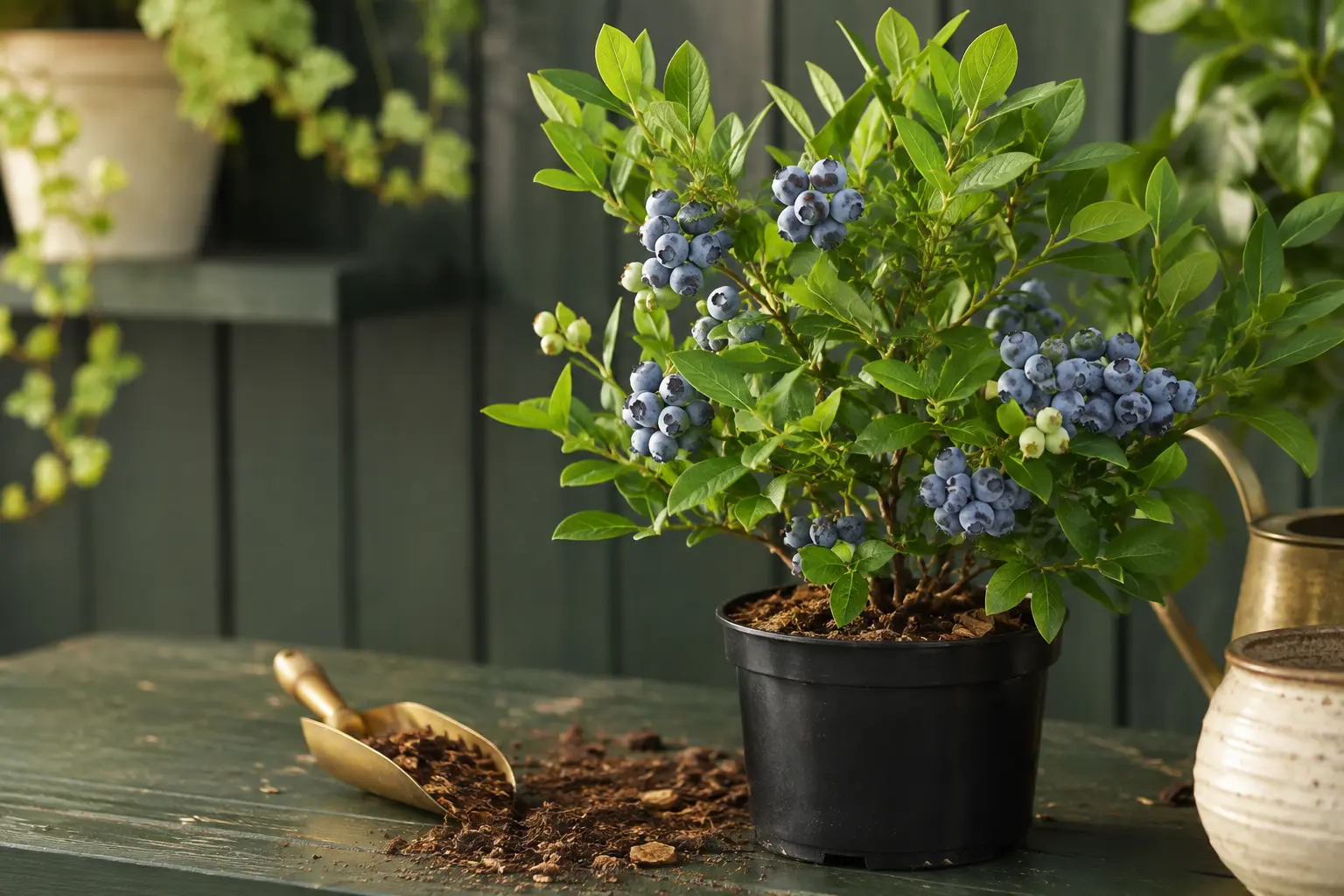
Acidic + bark based
An acidic, high-organic, free-draining nursery mix for starting blueberries in one-gallon pots.
GROWING GUIDANCE FOR
Central Maryland / BowieLocal Bowie-area baselineAt a Glance
Start with the plant, the space it needs, and the conditions that determine whether it will thrive.
CARRIED BY CENTRAL MARKET
This guide remains fully available even when the plant is not listed for pickup.
WHAT IT IS
A shallow-rooted, acid-loving perennial fruit shrub; cultivar choice determines chill needs, harvest season, and pollination compatibility.
BEST FIT
A good long-term crop for full sun and reliable irrigation when you can maintain pH 4.5–5.5 and provide a large container or prepared acidic bed.
QUICK PROFILE
BEST TIME TO PLANT OUTDOORS
RIGHT NOW
Prepare acidic soil before planting. Dormant or cool-weather planting reduces stress on shallow blueberry roots.
Early spring is the most forgiving time for highbush blueberries in the Mid-Atlantic. A dormant late-fall planting is also workable after the soil pH is corrected.
Prepare acidic soil before planting. Dormant or cool-weather planting reduces stress on shallow blueberry roots.
TIME TO HARVEST
Count from: planting nursery bushes
Keep early crops light while bushes establish; larger harvests take longer. Early and late cultivars ripen in different parts of the summer. Use cultivar color and easy release to judge ripeness; Pink Lemonade does not turn blue.
Approximate guidance, not a guaranteed harvest date. Cultivar, plant size, light, temperature, and care affect timing. For perennials, first harvest does not mean full production. Follow the plant tag and check readiness before picking.
SEASONAL REFERENCE
October Central Maryland
CURRENT STAGE
Typical stage for October in Central Maryland
Fruit is usually finished; green leaves gradually shift toward red, burgundy, orange, or yellow before dropping.
Increasing red fall color is a normal seasonal change, not automatically a nutrient problem.
Woody canes remain firm and visible as foliage thins.
The exact pace for blueberry can shift with sun, planting age, pruning, and Bowie-area weather.
These signs may be worth investigating. A symptom or photo alone cannot identify the cause.
December–March
April–May
June–August
September–November · Now
This is a typical Central Maryland stage, not a guarantee for every garden or every year.
NC State Extension · Highbush Blueberry Last reviewed: September 3, 2026This is what a healthy plant typically looks like at this stage. It is seasonal reference guidance—not a visual diagnosis. Microclimate, weather, plant age, recent transplanting, pruning, and cultivar variation can change appearance.
Plant group origins
North America; origins vary among blueberry species
Mapped countries: United States
The guide covers multiple Vaccinium species. The United States pin represents the North American blueberry species discussed in the linked profile.
Ordinary potting soil, lime, alkaline irrigation water, and small permanent pots cause chronic decline. Protect ripening fruit from birds.
Container size, microclimate, cultivar, tunnel temperature, and actual weather can move the timing. Use the plant tag and direct observation with this guide.