WHAT IT IS
Asian Eggplant
A group of slender, round, striped, white, or purple Solanum melongena cultivars selected for tender skin and distinctive regional uses.
HIGH TUNNEL + CONTAINER
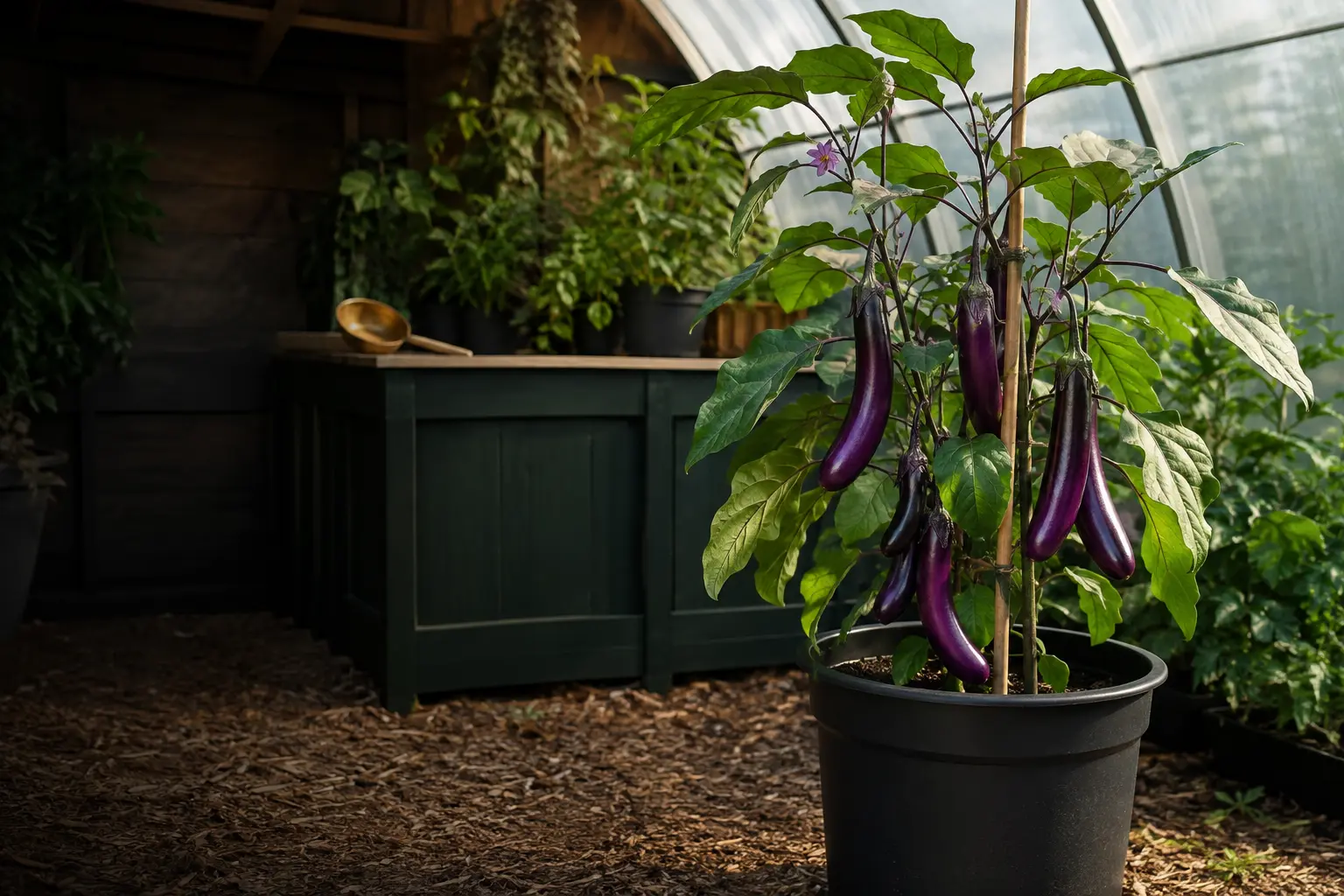
Warm + well aerated
A moisture-balanced container mix for long Asian, striped, white, and other specialty eggplants.
GROWING GUIDANCE FOR
Central Maryland / BowieLocal Bowie-area baselineAt a Glance
Start with the plant, the space it needs, and the conditions that determine whether it will thrive.
WHAT IT IS
A group of slender, round, striped, white, or purple Solanum melongena cultivars selected for tender skin and distinctive regional uses.
BEST FIT
A strong warm-season market crop for one plant per large pot with full sun, support, steady moisture, and frequent glossy-fruit harvest.
QUICK PROFILE
BEST TIME TO PLANT OUTDOORS
RIGHT NOW
The next recommended Bowie-area window is Mid-May–mid-June. Harden off transplants and set them only after warm nights become dependable.
Eggplant is among the most heat-demanding vegetables. UMD recommends transplanting from mid-May through mid-June in Central Maryland.
Harden off transplants and set them only after warm nights become dependable.
AVAILABLE AT CENTRAL MARKET
This guide remains fully available even when the plant is not listed for pickup.
SEASONAL REFERENCE
September Central Maryland
CURRENT STAGE
Typical stage for September in Central Maryland
Warm September weather supports continued harvest, but fruit set and enlargement slow sharply with cool nights.
Slower asian eggplant growth with shorter days is normal before frost ends the crop.
Productive upper growth can remain green while older lower leaves look worn.
The exact pace for asian eggplant can shift with sun, planting age, pruning, and Bowie-area weather.
These signs may be worth investigating. A symptom or photo alone cannot identify the cause.
December–March
April–May
June–August
September–November · Now
This is a typical Central Maryland stage, not a guarantee for every garden or every year.
University of Maryland Extension · Central Maryland Vegetable Planting Calendar Last reviewed: September 3, 2026This is what a healthy plant typically looks like at this stage. It is seasonal reference guidance—not a visual diagnosis. Microclimate, weather, plant age, recent transplanting, pruning, and cultivar variation can change appearance.
Cultivar shape and harvest size matter. Fruit becomes seedy and less tender after the skin loses its gloss.
Container size, microclimate, cultivar, tunnel temperature, and actual weather can move the timing. Use the plant tag and direct observation with this guide.